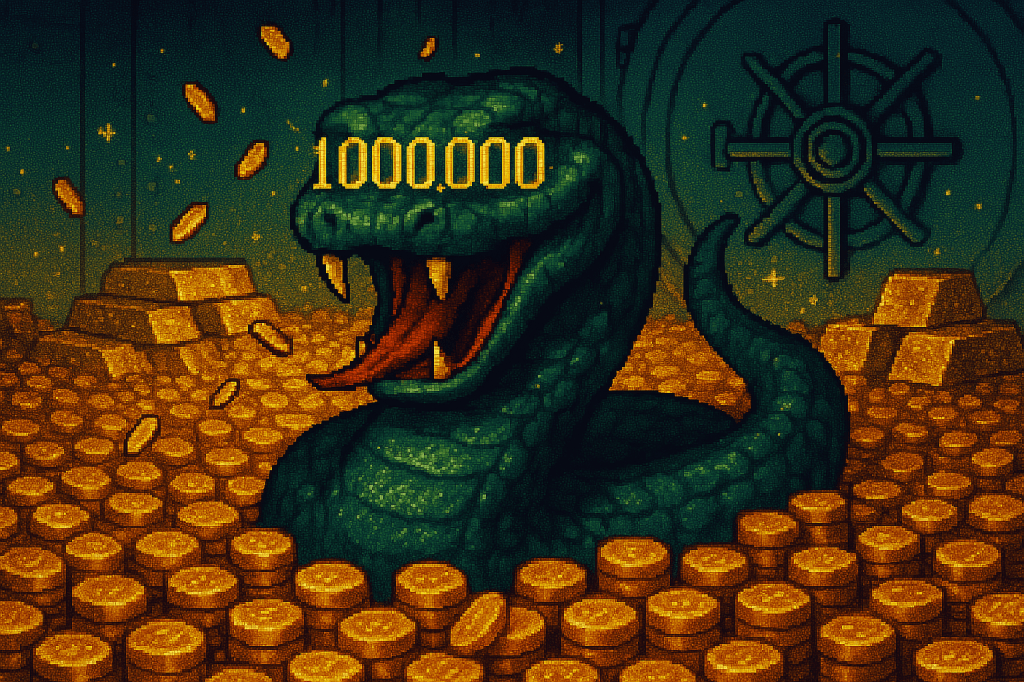
UPD from 14 April 2025: OpenAI just rolled out API-only ChatGPT 4.1 with a context window of 1000000 tokens, too. Things are getting interesting!
Google DeepMind just dropped Gemini 2.5 Pro, promising a 1 million token context window – soon to be upgraded to a mind-boggling 2 million tokens. Yes, you read that correctly: millions of tokens. On paper, Gemini’s upgraded multimodal capabilities (handling text, images, audio, video, and full code repositories) and this looks like the kind of breakthrough we’ve (we as in we the techno geeks, really, but you know what I mean) all been dreaming about.
However, before you start fantasizing about infinite memory and seamless interactions, let’s take a breath (turn on the Pink Floyd soundrack I’ve inclued, it might help set the tone). Because if past experience with state-of-the-art LLMs (looking at you, GPT-4 Turbo and Claude Sonnet) has taught me anything, it’s that token-millionaire status often comes with an asterisk.
The Token Trap
Here’s the not-so-secret truth about context windows in language models: size might impress investors and journalists, but in real-world applications, usability isn’t just about length – it’s about clarity and the performance speed.
Context windows are a bit like drinking contests. Sure, anyone can boast about how much they can theoretically handle – but past a certain point, performance rapidly degrades into something resembling a drunken rant (the following stats are only based on practical experience of me ranting at the LLMs for days as I’m a notorious external processor):
- At 10,000–20,000 tokens, coherence is still possible, provided you’re diligently summarizing and prompting the model carefully.
- After about 50,000 tokens? Expect some amusing misunderstandings aaaaand lag.
- At 100,000 tokens? Prepare yourself for the linguistic equivalent of a 3 AM rambling voicemail from your favorite ex – entertaining, yes, but hardly reliable. And mooooore lag.
- 1,000,000 tokens? I can only make an educated guess, but that guess is: Welcome to hallucination city, population: Gemini.
Hallucinations and Vector Space Noise
Why does this happen? It’s simple math – or rather, not-so-simple math (and I’m BAD at math, but I’ll do my best to explain the whole source of this rant). As the token count increases, the vector space (aka the model’s mental map of the conversation) becomes increasingly noisy and less precise.
It’s like trying to remember a detailed plot from a long book you skimmed through after too many espressos (or even Espresso Martinis depending on the size of this imaginary book). Bits get fuzzy, narratives blend, and suddenly the AI confidently hallucinates in response to a question that references something from the beginning of the chat thread.
Reality Check: Summaries Save Lives (or at Least Sanity)
The truth is, despite Gemini’s impressive multimodal prowess, actual usability demands strategic management:
- Regular Summarization: Without frequent prompts instructing Gemini to condense previous interactions, context clarity vanishes faster than backstage beer at an after-party.
- Careful Prompt Engineering: Each interaction must strategically reinforce critical context points.
- Continuous Reality Checks: Expect and proactively counter hallucinations before they derail your entire interaction.
Infinite Memory? Hardly.
Gemini’s colossal token window isn’t infinite recall – it’s more like a gigantic closet you toss everything into, only to struggle finding your favorite leather jacket later. Sure, it’s all theoretically there, but good luck digging through it.
The Bottom Line
Yes, Gemini 2.5’s numbers look incredible. But don’t be dazzled by the million-token hype. Real-world performance hinges not on raw context size, but on careful prompting, disciplined summarization, and a healthy skepticism towards bold claims of AI infallibility.
So, who wants to be a token millionaire? Perhaps those who value style over substance – or just really, really enjoy hallucinations.
The rest of us? We’ll keep our context windows tight, our prompts sharp, and our expectations realistically grounded.
After all, infinite memory is for marketing brochures – actual performance demands vigilance.
 How to Build a Basilisk
Leave a comment